Yönetim Paneli — New Peckham Mosque Logo
Islamic Community Millî Görüş (ICMG)

New Peckham Mosque is a branch of Islamic Community Milli Görüş (ICMG), a well-established Islamic community that provides religious, social and cultural services for Muslims and wider society. Serving according to the principles of ʾAhl al-Sunnah wa al-Jamāʿah, ICMG is guided by the Qur’ān, Sunnah, Ijmāʿ and Qiyās in teaching, practising and transmitting Islam to future generations. Through education, irshad, worship, social support, community engagement and humanitarian service, ICMG works to strengthen faith, morality, justice, solidarity and responsibility in all aspects of life.

“And let there be [arising] from you a group of people inviting to [all that is] good, enjoining what is right and forbidding what is wrong, and those will be the successful.”  ‘Āli ‘Imrān, 3:104

WHO WE ARE

The Islamic Community Millî Görüş (ICMG) is a faith-based community and civil society organization that provides religious, social, and cultural services. Its mission is to support the learning, practice, transmission, and representation of Islam, ensuring that its principles are reflected in daily life. Politically and financially independent, ICMG represents Muslims in religious, social, and cultural matters, addresses their concerns, and works to safeguard their fundamental rights.

The Qur’ān and the Sunnah form the foundation of ICMG’s understanding of Islam. In this view, Islam is not confined to the mosque but embraces every dimension of individual and communal life. It calls believers to moral values, as well as to personal and collective responsibility. ICMG does not regard Islam as bound to any one region or cultural tradition but as a universal faith lived by the guidance of the Qur’ān and the Sunnah of our beloved Prophet (peace and blessings be upon him). Diversity in religious practice is seen as a source of enrichment for faith and community life.

Members of ICMG, while maintaining ties with their countries of origin, also see themselves as integral to the societies where they live, embracing their countries of residence as their homelands. In this spirit, ICMG considers contributing to the peace and prosperity of these societies part of its responsibility. At the same time, as members of the global Muslim community, it regards attentiveness to the challenges faced by the ummah as a religious obligation.

With a consciousness of responsibility toward all humanity, ICMG stands with the oppressed and vulnerable, opposes all forms of injustice, and promotes core human values such as kindness and solidarity. It plays an active role in addressing economic, political, and social challenges, engaging in ongoing dialogue with public institutions and civil society organizations. Inspired by the Prophetic injunctions, “Compete with one another in goodness and piety,” “The best of people are those who are most beneficial to others,” and “Make things easy, do not make them difficult,” ICMG seeks to build social relations on common ground and shared values rather than divisions.

Just as certain obligations in Islam such as acts of worship that require communal participation, can only be fulfilled collectively, so too can the protection of the poor and vulnerable, the fight against injustice, the promotion of good, the prevention of wrongdoing, and the pursuit of justice in social relations be carried out only through collective effort. This need for community has been a unifying force, encouraging Muslims, particularly in Europe and across other continents to gather under the umbrella of IGMG (ICMG in the UK).


Video Presentation

THE MEANING OF THE PHRASE “MİLLÎ GÖRÜŞ”
AN INTELLECTUAL IDENTITY

THE MEANING OF THE PHRASE “MİLLÎ GÖRÜŞ”

According to Islamic belief, all humanity traces its origin back to the first human and prophet, Adam (peace be upon him), and his wife, Eve. From Adam onward, God has sent prophets and scriptures to guide people to the straight path. Among this chain of prophets, Abraham (peace be upon him) is regarded as the patriarch of all who follow monotheistic faiths. In this respect, the name of our organization makes a direct reference to Prophet Abraham.

The word Millî is derived from the Qur’ānic term millah (rendered in Turkish as millet). This term, frequently mentioned in the Qur’ān, for example, in “the millah of Abraham”, appears in verses such as Surah al-Nahl (16:123), Surah Āl ʿImrān (3:95), and Surah al-Nisāʾ (4:125). In the Qur’ānic sense, millah denotes a community of believers gathered around a prophet, united by the values, ideals, and traditions he brought.
Thus, the phrase Millî Görüş in the name “Islamic Community Millî Görüş” is to be understood as the worldview and conviction of an Islamic community that regards itself as part of the millah of Abraham (peace be upon him) and follows the path of Prophet Muhammad (peace and blessings be upon him). In this understanding, the community strives for the peace, well-being, and guidance of humanity.
THE HISTORICAL DEVELOPMENT OF ICMG
THE ORIGINS

THE HISTORICAL DEVELOPMENT OF ICMG

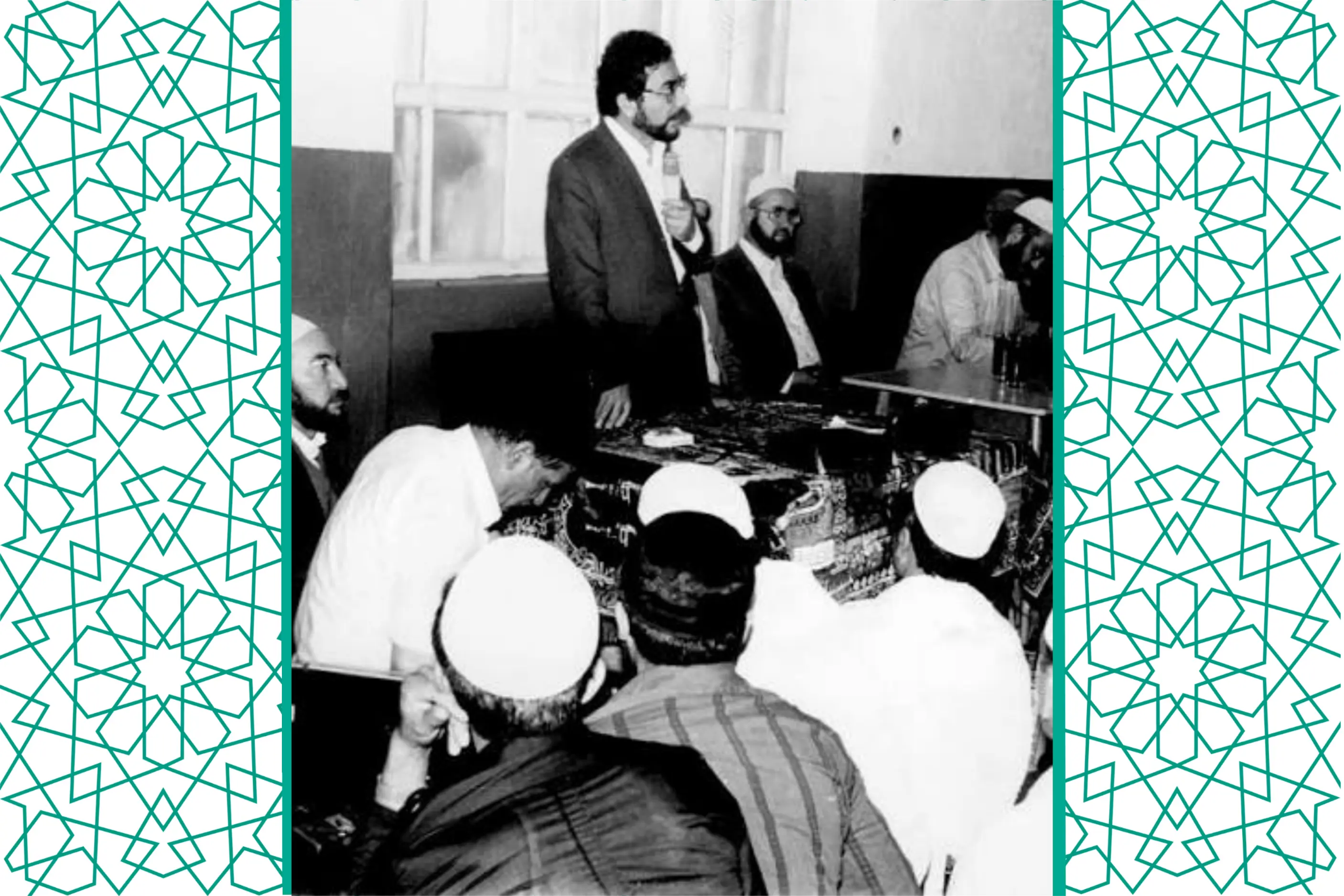
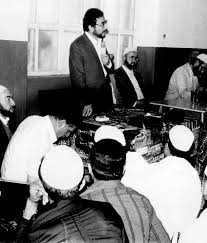
In the 1960s, millions of Muslims migrated to Europe from Türkiye and other countries to work in Germany and beyond. At the time, no official steps were taken to meet their religious and spiritual needs. In response, these workers, strangers in a foreign land took it upon themselves to preserve their faith and to raise their children within it. From the early 1970s onward, they formed small congregations around modest prayer rooms where they could gather for worship. During this period, Turkish workers and university students also began establishing associations. One such group was the Turkish Union, founded in Braunschweig in 1967 by eight Muslim students.It attained official legal status in 1969 and subsequently became one of the precursor organisations to IGMG (Islamische Gemeinschaft Millî Görüş), whose institutional framework is reflected in the United Kingdom through the ICMG (Islamic Community Millî Görüş). Over time, the organization operated under several names, including Turkish Union, Turkish Workers’ Union, Turkish-Islamic Union, and Islamic Union.

By the 1980s, these small congregations had grown into regional bodies and federations. Building mosques, organizing Hajj and Umrah pilgrimages, and training and appointing imams and counselors had all become pressing needs. To respond, on May 20, 1985, one of the forerunners of IGMG was officially founded under the name AMGT (Avrupa Millî Görüş Teşkilatları). With this step, numerous associations, including youth branches, came together under one roof. As a religious organization, AMGT began to plan for the future with a new structure, eventually changing its name in 1995 to the IGMG (Islamische Gemeinschaft Millî Görüş).
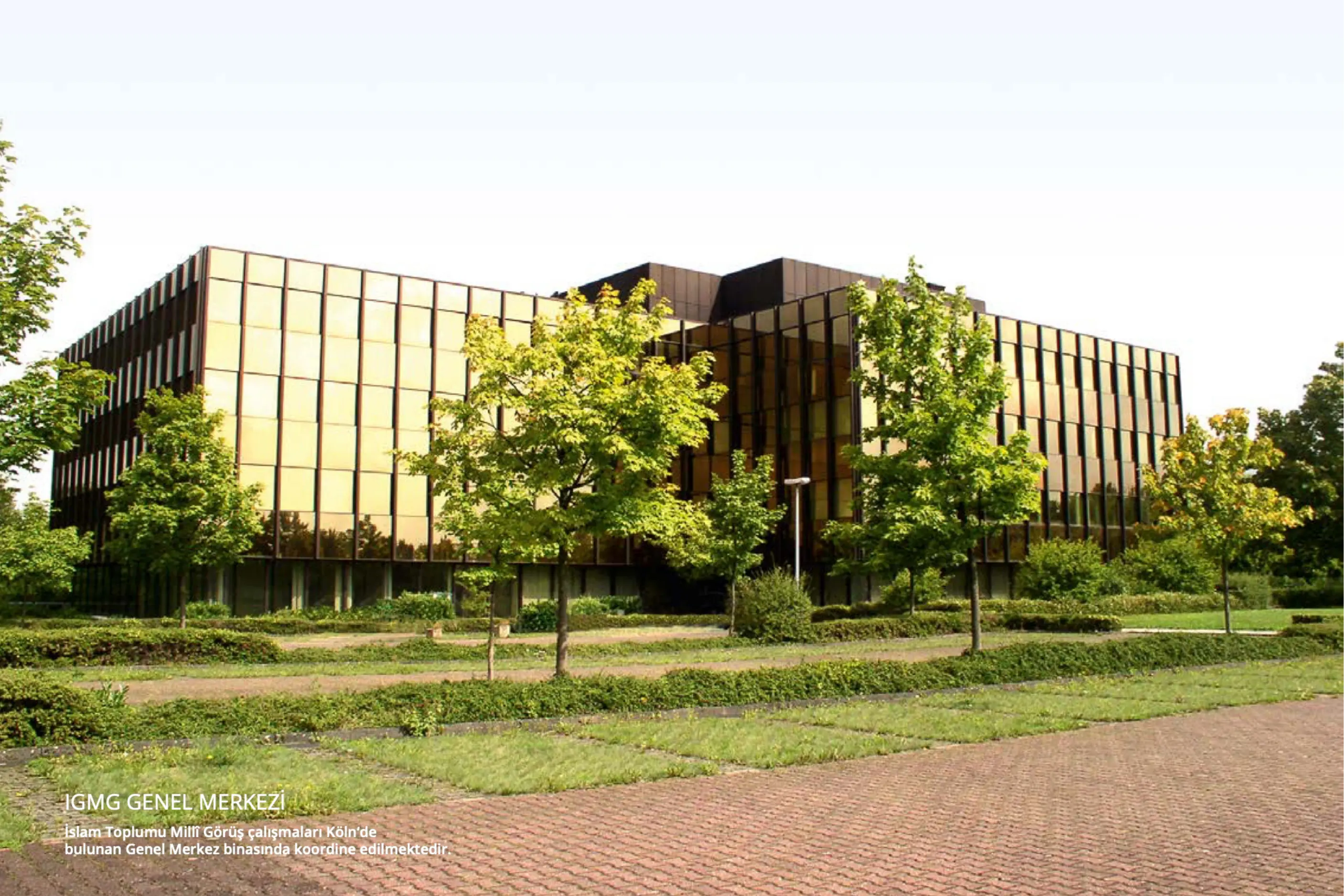
HEADQUARTERS STRUCTURE
ORGANISATIONAL GOVERNANCE

HEADQUARTERS STRUCTURE

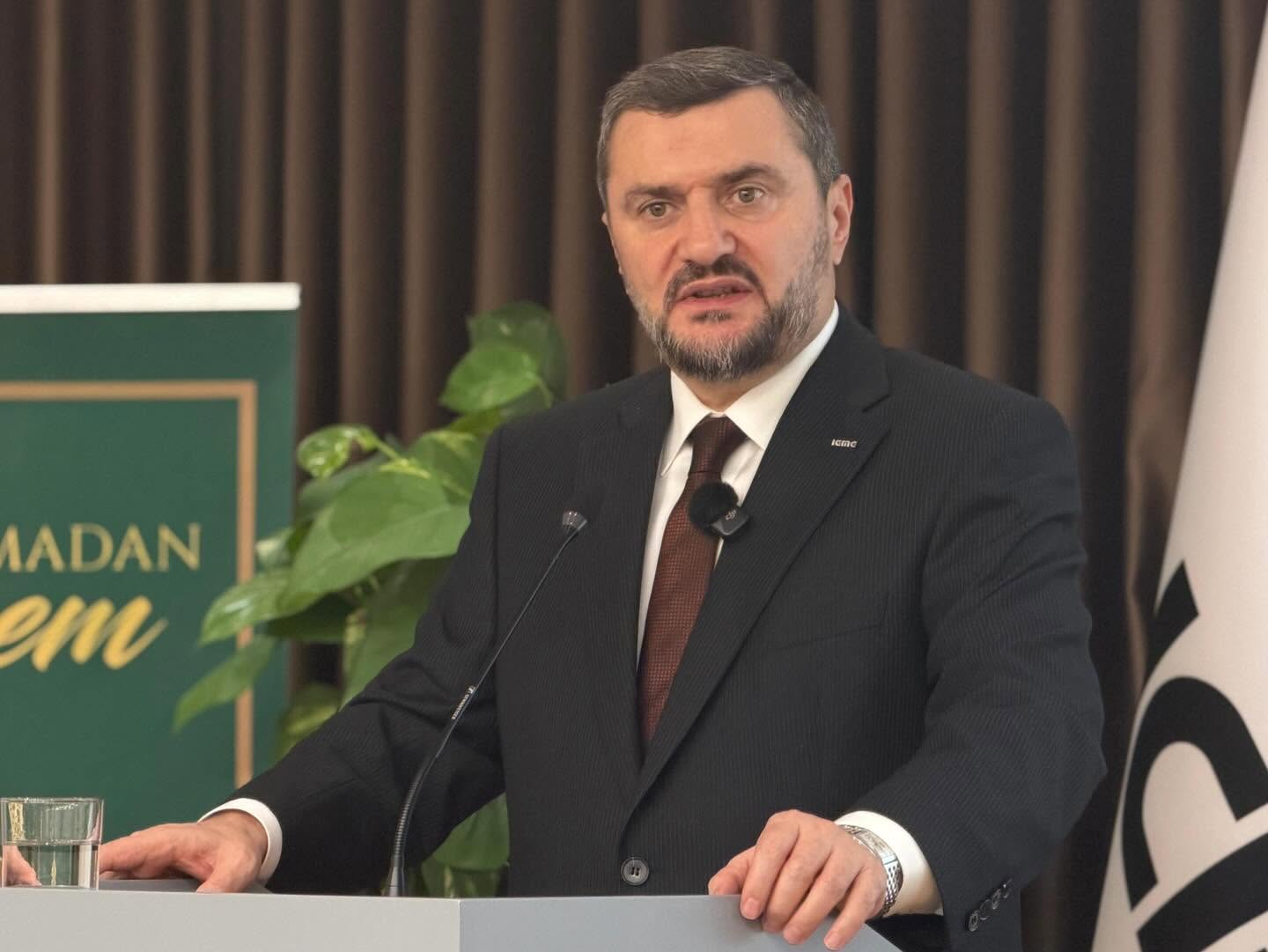
The Executive Board is the principal body where all essential matters concerning IGMG are discussed and decided upon. Chaired by the President, the Executive Board consists of the heads of the following departments: Organization, General Secretariat, Education, Religious Guidance, Finance, Humanitarian Aid and Social Services, Women’s Branch, Youth Branch, and Women’s Youth Branch, as well as advisors to the President, 10 departments in total.

The Central Executive Committee is responsible for implementing the decisions of the Executive Board within the framework of statutes and regulations. In addition to the department heads represented in the Executive Board, the Committee also includes the deputy heads of Organization, General Secretariat, Religious Guidance, and Education, as well as the Deputy Head of Humanitarian Aid and Social Services, the Head of Property Affairs, the Head of Hajj, Umrah and Travel, the Head of Communications, the Head of Culture and Arts, the Head of Accounting, the Head of Personnel and Administrative Affairs, the Head of Audit, and the Head of University Students.

IGMG’s departments are organized according to the services they provide in different fields and for diverse audiences. Each department continues its work together with its subunits.

Media Gallery

Swipe or drag to explore our photo archives
Gallery Photo
Zoom
Gallery Photo
Zoom
Gallery Photo
Zoom
Gallery Photo
Zoom
Gallery Photo
Zoom
Gallery Photo
Zoom
Gallery Photo
Zoom
Gallery Photo
Zoom
Gallery Photo
Zoom
Gallery Photo
Zoom
Gallery Photo
Zoom
Gallery Photo
Zoom
Gallery Photo
Zoom
Gallery Photo
Zoom
Gallery Photo
Zoom
Gallery Photo
Zoom
Gallery Photo
Zoom
Gallery Photo
Zoom
Gallery Photo
Zoom
Gallery Photo
Zoom
Gallery Photo
Zoom
Gallery Photo
Zoom
Gallery Photo
Zoom
Gallery Photo
Zoom
Gallery Photo
Zoom
Gallery Photo
Zoom
Gallery Photo
Zoom
Gallery Photo
Zoom
Gallery Photo
Zoom
Gallery Photo
Zoom
Gallery Photo
Zoom
Gallery Photo
Zoom
Gallery Photo
Zoom
Gallery Photo
Zoom
Gallery Photo
Zoom
Gallery Photo
Zoom
Gallery Photo
Zoom
Gallery Photo
Zoom
Gallery Photo
Zoom
Gallery Photo
Zoom
Gallery Photo
Zoom
Gallery Photo
Zoom
Gallery Photo
Zoom
Gallery Photo
Zoom
Questions & Answers

Frequently Asked Questions

In a Hadith, it is stated what amount and how much of the amount will be given. However, since there was a difference in the scales at that time and a change in the use of the goods, Islamic scholars state that the Fitra amount of today should be at least one person’s daily food needs. The amount calculated for this year is £10 per person.
You prefer the Food Campaign section under this section and you determine the amount of aid you will make. Then, you click the continue button and enter your information completely on the page that opens, making your payment.
It is sent to all of our donors, who provide contact information and contact information, either by sms or by e-mail. We also inform our donors who provide their addresses by post as a card.
On our page You select the Sacrifice section from the Donate section. You select the Qurban Campaign section under this section and you determine the amount of aid you will make. Then, you click the continue button and enter your information completely on the page that opens, making your payment.
It is permissible to give the zakat of gold, silver, agricultural products, pets and commodities in their own kind, as well as to give them on their assets. The purpose of zakat is to meet the needs of those in need. Zakat can be paid from the goods subject to zakah, and it can also be provided by valuing the goods that are often subject to zakat and those in need meet their own needs.
WhatsApp

Stay Connected with the Community

Follow the official New Peckham Mosque WhatsApp channel to get the latest updates delivered instantly straight to your phone.


+44 20 7946 0199